Most beef changes hands many times before it hits a plate, with no way to trace where it's been. Ours runs through one short, known chain — and we can tell you every step. Here's the whole road.
We raise and sell Fullblood Tajima — the Japanese Black bloodline behind Kobe beef — and Akaushi, the Japanese Red. Alongside the fullbloods, we sell Tajima × Black Angus F1 and F2 crosses: Wagyu marbling on proven American frames. Fullblood or cross, the genetics are documented and the marbling is real.
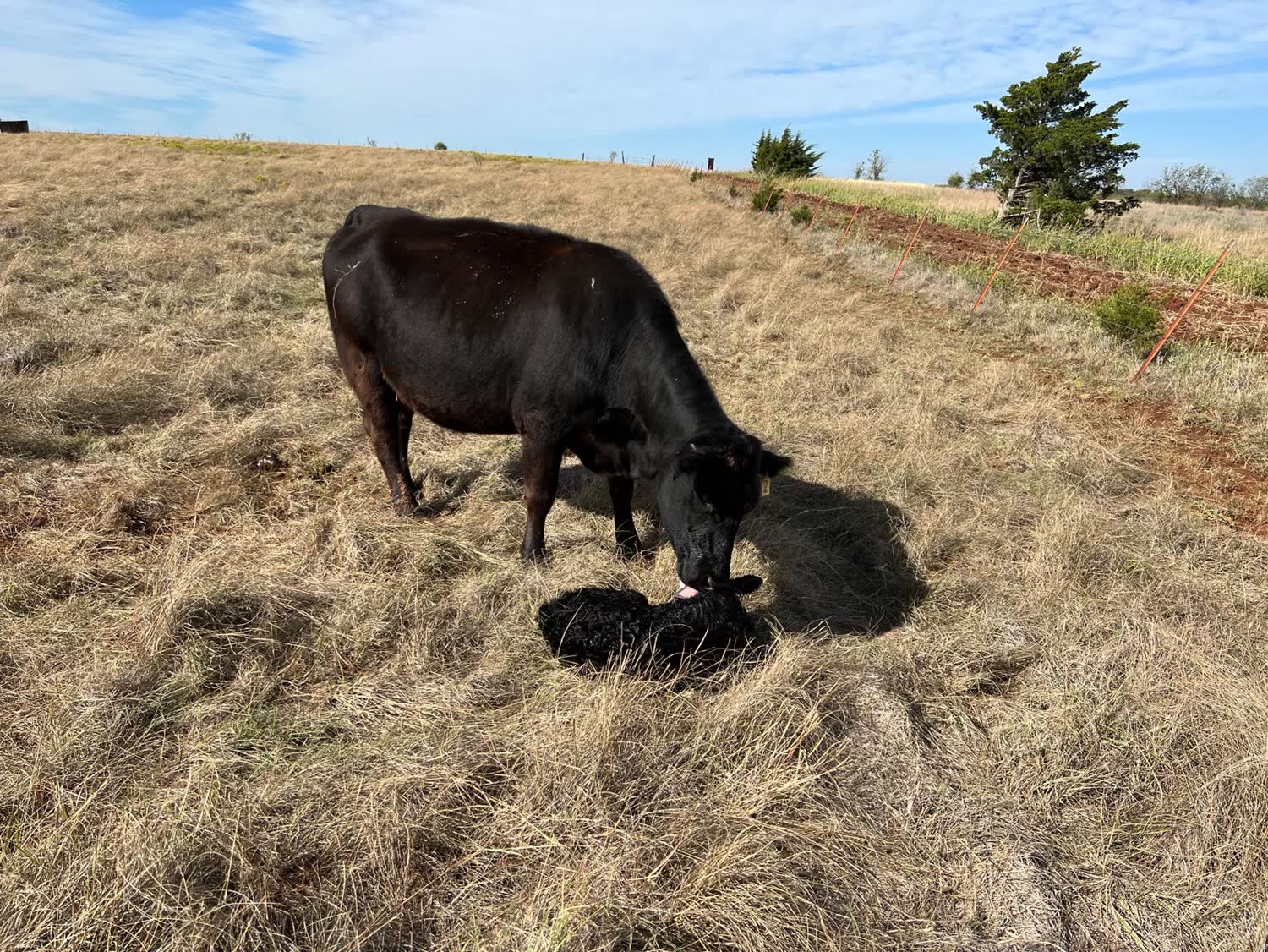
Our cattle live on pasture right here in Oklahoma. No growth hormones. No steroids. No medicated feed. Low-stress handling and honest labels — we know every animal in our cooperative chain. That's not a marketing line; it's just the size of the operation. Our Wagyu program is produced in cooperation with Oklahoma Wagyu and the Rucker Ranch.
Wagyu rewards time. Our beef is finished slowly and deliberately at Rucker Ranch — that's where the marbling develops — rather than rushing animals to a target weight. It costs us months. It earns you the difference you can taste.
Every animal is processed in small batches by Walke Meats of Claremore, Oklahoma — a family meat company cutting beef since 1996. Dry-aged, vacuum-sealed, and labeled honestly. No mystery boxes, no water-added tricks — the weight on the label is beef.
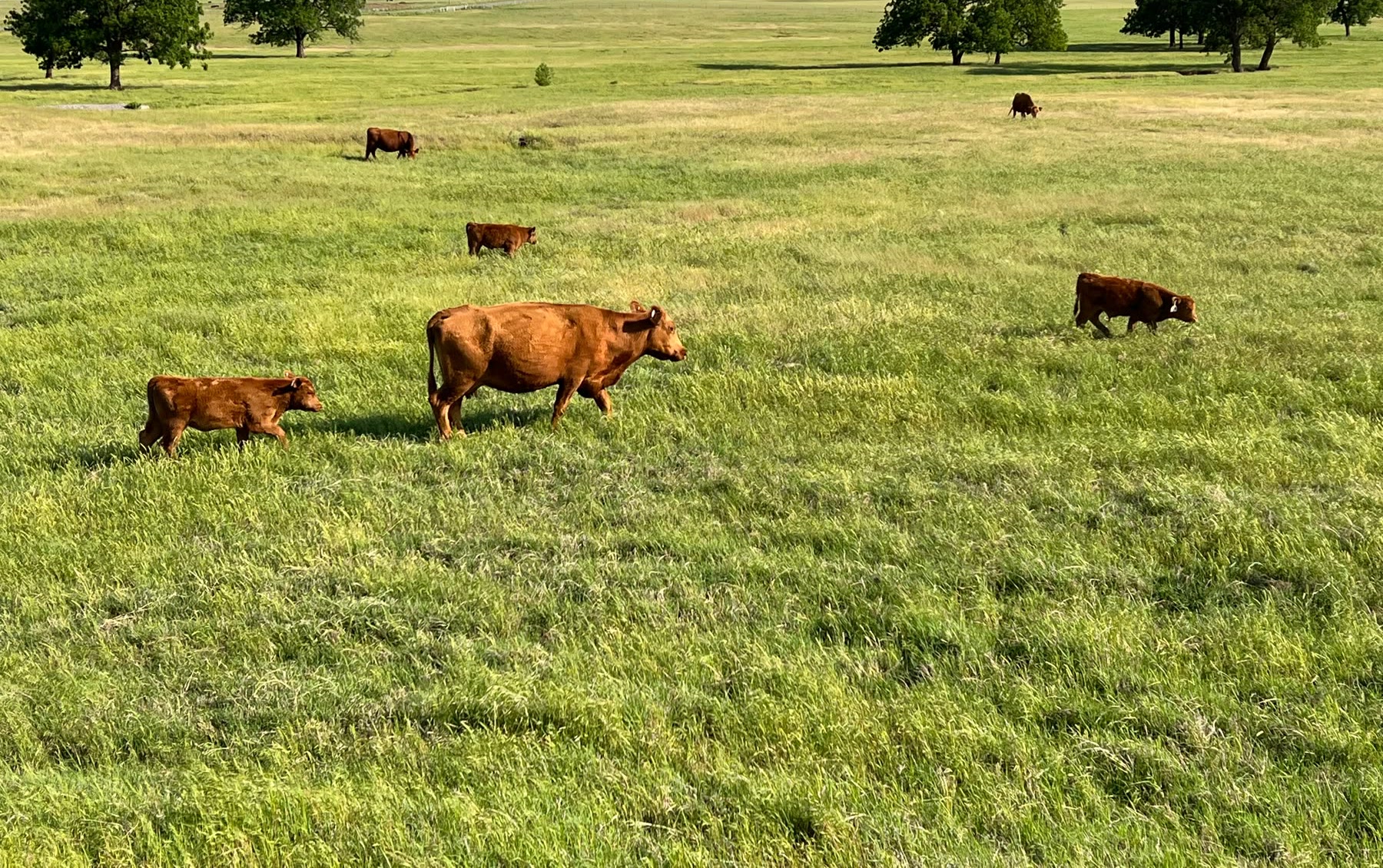 Real Paladin photo
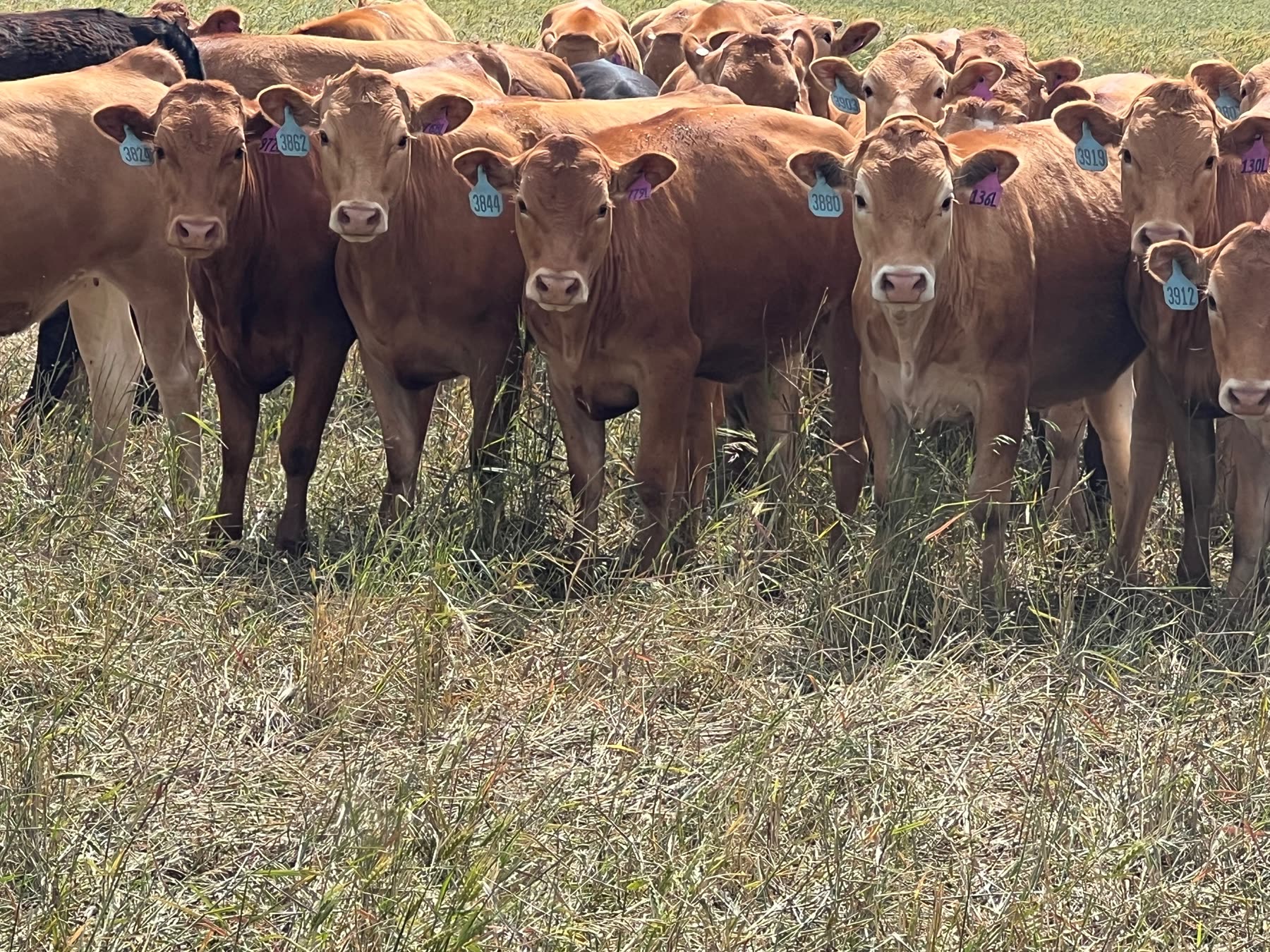 Real Paladin photo
"Wagyu" simply means "Japanese cow" — but the cattle behind the name carry a history unlike any other breed. For centuries before the Meiji Restoration of 1868, Japanese cattle were draft animals: plowing fields, hauling timber, working mines. Beef was rarely eaten. Those working cattle developed in isolation, and by the early 1900s distinct regional bloodlines had emerged — the Tajima strain in Hyogo Prefecture, the line behind Kobe beef, and the Akaushi (Japanese Red) of Kumamoto.
The first Wagyu ever exported reached the United States in the mid-1970s — four bulls, no females. The genetic window cracked open in 1993 when the first females arrived, then slammed shut in 1997 when Japan halted further exports of live animals and genetics for good. In total, fewer than 200 live Wagyu ever left Japan — a founding population of barely 220 counting the Japan-conceived calves that came with them. Every fullblood alive outside Japan today — including ours — traces back to that small founding herd. That's why authentic fullblood genetics remain genuinely rare: an often-cited American Wagyu Association estimate puts fullblood Wagyu in the U.S. at fewer than 5,000.
A debt worth naming: Dr. Albert J. Wood. Among the founders of American Wagyu, one deserves particular recognition from any ranch running Akaushi. Dr. Al Wood — an oncology and hematology physician practicing in Corpus Christi, Texas — was breeding from those first four bulls back in the 1970s, when almost nobody in America had heard the word Wagyu. He watched the tiny gene pool run into inbreeding trouble and knew the answer was in Japan. When the door finally cracked open, he and his wife Marie went and got it done: in 1994 they brought fullblood Akaushi — the Japanese Red of Kumamoto — out of Japan and into American quarantine, animals selected in Kumamoto Prefecture itself.
Every fullblood Akaushi in America today traces to that handful of animals. The Akaushi grazing our Oklahoma pasture carry his legacy in their pedigree. A doctor who spent his career fighting for people's lives spent his fortune preserving a breed — and American ranchers have been in his debt ever since.
 Archive photo — Dr. Al Wood, who led the 1994 Akaushi import from Kumamoto Prefecture
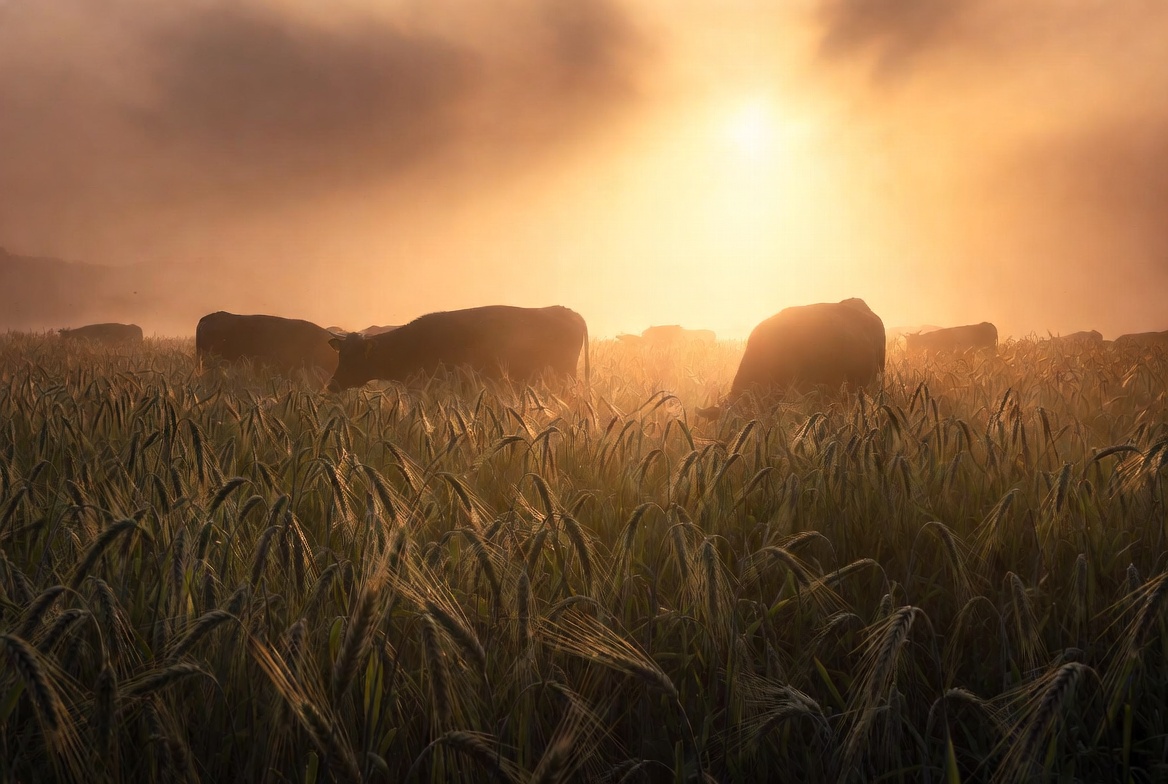
Traditional Japanese Wagyu feeding is built on one principle: feed for quality, not speed. Finishing runs to 28–30 months of age — roughly double the commodity-beef timetable — so marbling develops in slow, consistent layers. The classic rations lean on corn, barley, and wheat bran for energy, with rice straw as the traditional Japanese roughage, and byproducts like barley husks doing the protein work.
We follow the same philosophy with Oklahoma inputs: hay straw and other quality hays as needed stand in for rice straw as our roughage. And here's where we differ from most American programs: no soybeans. Soybean meal is a common protein filler in many American Wagyu rations. We've chosen non-soy protein sources instead — wheat bran, barley, and quality forage. Slower feeding, more expensive feeding. The beef proves it was worth the wait.
 Real Paladin photo
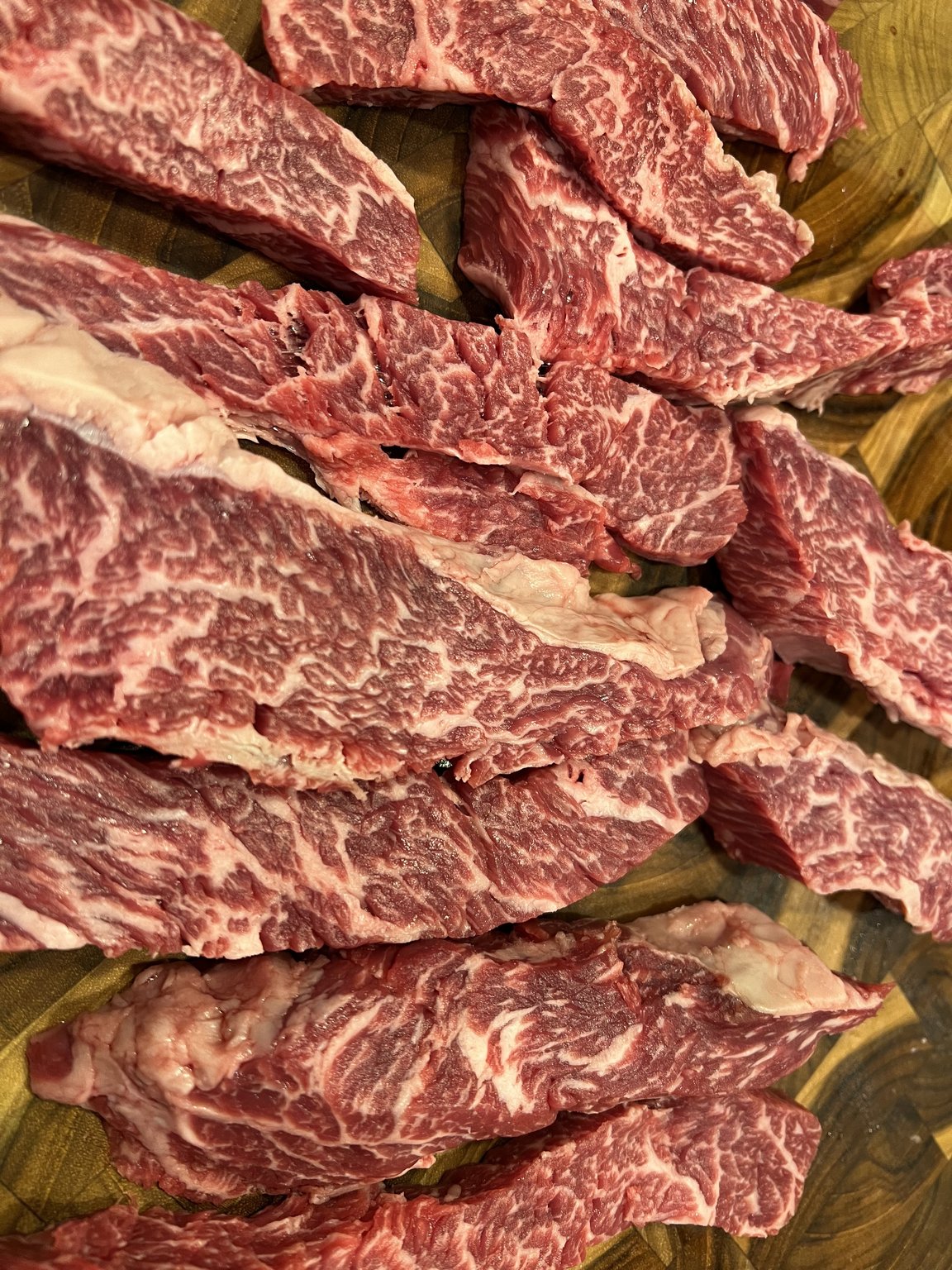
Wagyu marbling isn't just more fat — it's different fat. Peer-reviewed research consistently shows Wagyu fat runs about 50–55% monounsaturated fatty acids — predominantly oleic acid, the same fat that dominates olive oil — versus roughly 35–40% in conventional grain-fed beef. That's also why Wagyu fat melts near body temperature and feels buttery on the tongue, where ordinary beef fat stays waxy.
The genetics matter: Texas A&M research showed Wagyu cattle accumulate more oleic acid than Angus even on identical diets. And a controlled study in the British Journal of Nutrition found hamburger high in monounsaturated fat was at least neutral on key cholesterol markers, where hamburger high in saturated fat was not.
What we won't claim: Wagyu is not a health food. It's rich, calorie-dense beef with a genuinely different — and compositionally favorable — fat profile. We'll let the research say what it says, and the steak do the rest.
 Real Paladin photo
Here's an opinion most Wagyu sellers won't put in writing: A5 — the top Japanese grade — is too much for most American steak lovers. Highly marbled fullblood Tajima Wagyu at maximum grade is so rich and buttery that a few ounces is a tasting experience, not a steak dinner. Magnificent, but it isn't how Americans eat beef.
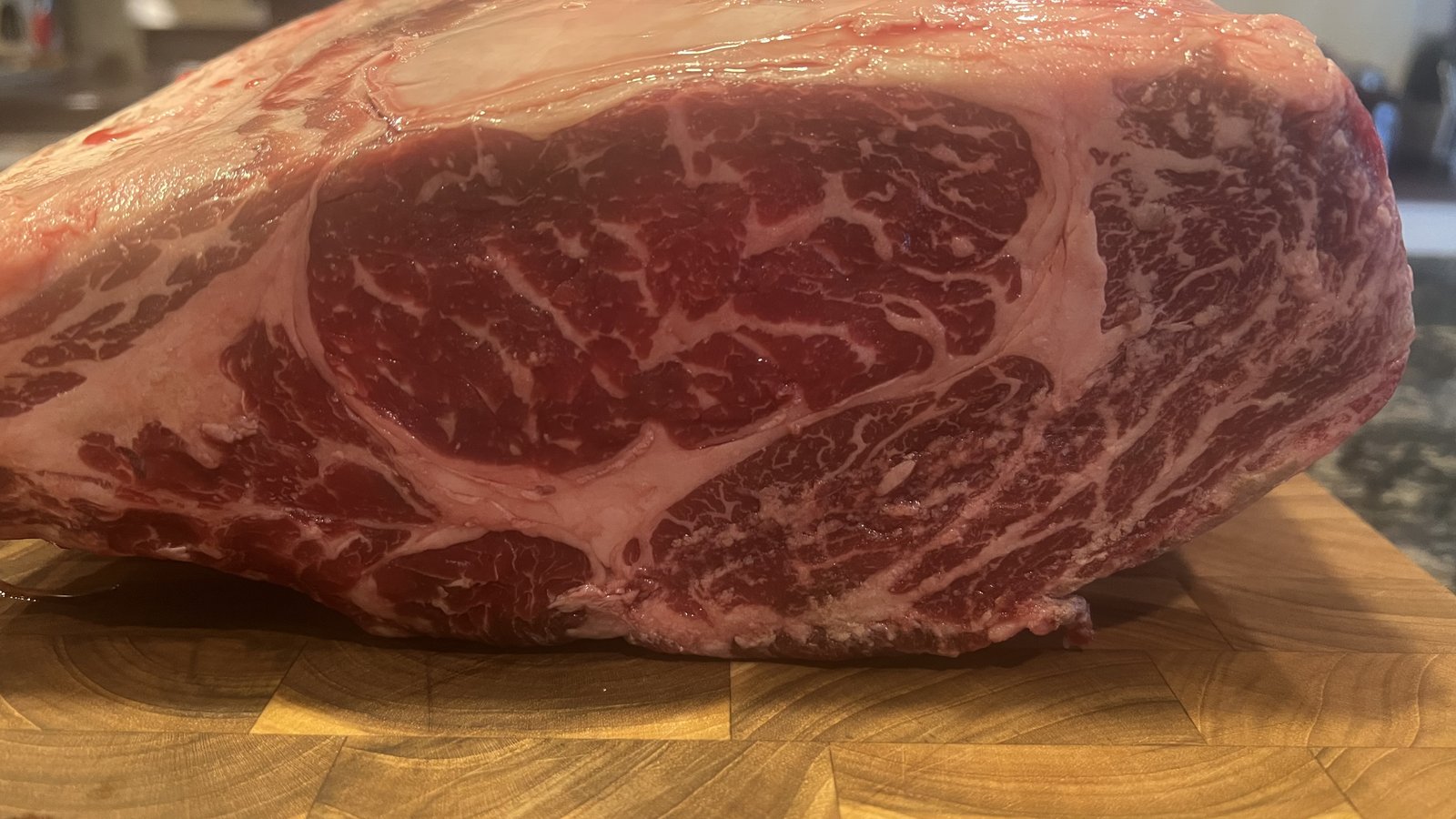
So we deliberately target A4-range marbling — and it's why we breed our Tajima × Black Angus crosses the way we do. The Angus brings the beefy pop and satisfying chew of a great American steak; the Tajima genetics deliver the Wagyu smoothness and buttery marbling that make it unlike anything else on the grill. A steak you can eat a whole plate of, and want to. That's the target, and we hit it by design.
 Real Paladin photo
 Real Paladin photo
Months of pasture, patient finishing, small-batch processing — all of it exists so that one evening, in your kitchen, a steak does this. Marbling isn't a spec sheet; it's the sizzle, the crust, and a dinner nobody at the table talks through. Put one on your own plate.
Our Wagyu are raised on Paladin Farm and our partner Rucker Ranch — some animals on both — finished at Rucker Ranch, and processed at Walke Meats, a USDA-inspected Oklahoma processor. One cooperative chain, start to finish, and we can tell you every animal’s story.

Rucker Ranch American Wagyu, raised in northeastern Oklahoma. oklahomawagyu.com

Small-batch processing, dry-aging, custom cut sheets, and the specialty items our customers ask for by name — from Wagyu beef bacon to full custom cut sheets on half and whole shares.
Farmers market, local delivery, or a freezer full from a share — the road ends at your kitchen. Shop the cuts or reserve a share.
Ranch to butcher to your table — three stops, no strangers.
Shop the Cuts